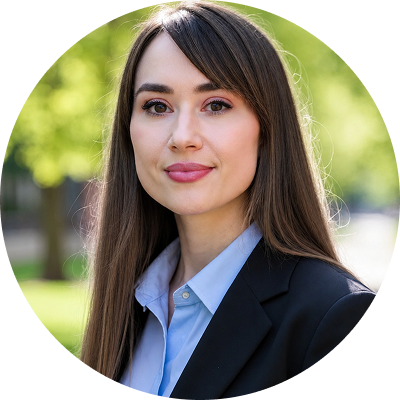
Ruth works across Autism and ADHD assessment, neuropsychological assessment and therapy. Her neuropsychology training is particularly useful when several factors may be contributing to the same difficulty, because the task is to work out what is producing the pattern and what that means for intervention.
What does Ruth work with?
Ruth completes Autism and ADHD assessment and neuropsychological assessment for questions involving intellectual functioning, attention, memory, executive functioning and learning.
Her therapy work is primarily with neurodivergent adults and can include situations where trauma, emotional regulation or executive functioning difficulties are part of the clinical picture.
How does Ruth work?
Ruth begins by developing a formulation of what is happening and what is contributing to it. She uses clinical interview, observation and, where useful, questionnaires or structured assessment. Two people can describe the same difficulty for different reasons, and the explanation changes what is likely to help.
She draws on EMDR, IFS and parts work, ACT, DBT, schema therapy and somatic approaches, modifying the therapy according to the person’s neurodivergent profile, cognition and communication style. Her neuropsychology training also means she considers memory, attention, executive functioning, language, sensory processing and physical factors that can affect cognition. Sometimes a strategy is psychologically sound but cognitively unrealistic for the person expected to use it.
Ruth generally gives therapy a clear structure. Goals are agreed and tracked across sessions, with room to change direction when something more important arises. She also uses questionnaires or other structured measures when they help clarify a pattern, establish a baseline or check whether the work is changing what it was intended to change.
Qualifications and background
Ruth completed a Bachelor of Psychological Science (Honours) at the University of New England and a Master of Psychology (Clinical Neuropsychology) at the University of Melbourne. Her clinical training included placements at Austin Health, Epworth, the Royal Melbourne Hospital and the Royal Children’s Hospital. She has over 15 years of experience working with individuals experiencing psychological distress, in particular the neurodivergent and disabled community.
Still not sure where to start?
If you still have a question about which Mindkit service fits what you need, book a free 15-minute telehealth consult. You can ask about the options before deciding whether to book anything else.